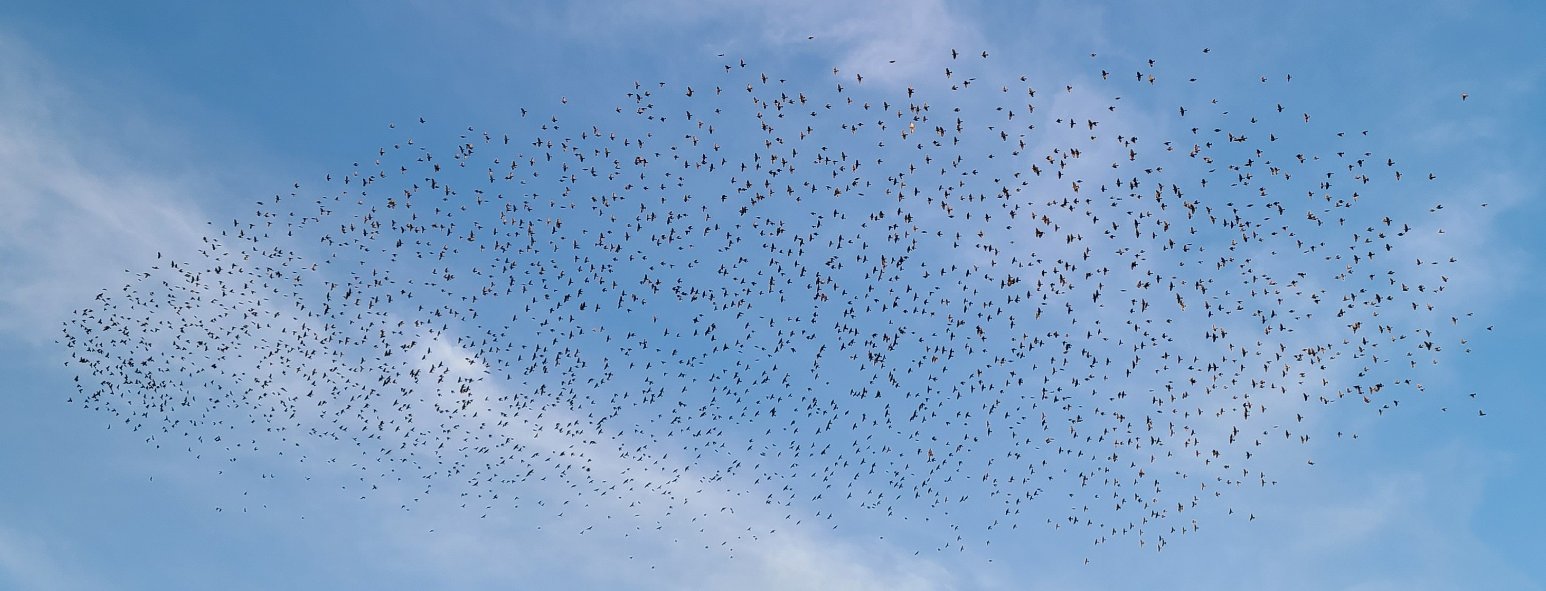
Frequently Asked Questions about Bird Murmurations at Kalkar Pond
Bird murmurations are large gatherings of birds flying in beautiful coordinated patterns. While they are fun to watch, it is important to remember that this is a wild activity that they do for themselves, not for people.
Thank you for asking!
- Please watch quietly. Loud talking and barking dogs negatively impact bird behavior.
- Please - no off-leash dogs. Even leashed dogs are best left at home.
- Best viewing is at the picnic area by Limestone Lane and the Cement Overlook.
- Kalkar Quarry is private property. Please treat the neighborhood with respect.
Defense Against Predators: They create a "confusion effect" for predators like falcons.
Roosting Gathering: The display acts as a giant "billboard" inviting other birds to share body heat.
Social Networking: Birds observe which individuals are well-fed and follow them the next morning.
The residents vary, but here are the main species:
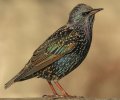
European Starlings: Consistent residents. Beautiful but non-native and aggressive.
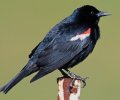
Tri-colored Blackbirds: A protected species with striking red and white epaulets/shoulders. Further reading: Breeding Status, Distribution & Habitat Associations of the Tricolored Blackbird
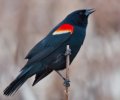
Red-Winged Blackbirds: Common natives with red and yellow epaulets/shoulders.
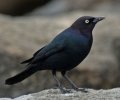
Brewer's Blackbirds: Although these are a common bird, they are less abundant at Kalkar Pond.
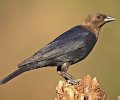
Brown-headed Cowbirds: Less abundant in Kalkar Pond, these are a type of blackbird with distinct brown heads. There are too few in numbers to be part of the murmuration.
How do you know which ones you're seeing? This requires a little practice, but blackbirds fly differently than starlings, and the different blackbirds can be differentiated by using your binoculars to look at the colors of their epaulets (shoulders). The females lack this coloration and are thus more difficult to differentiate.